A refusal is not always the end. In this guide, we explain the most common Canada visa refusal reasons, how to get the officer’s notes, and how to decide between reapplying and a judicial review.
Receiving a refusal from Immigration, Refugees and Citizenship Canada (IRCC) is stressful, especially after months of planning. However, many refusals happen because the file did not clearly answer the officer’s questions. That is why this guide explains the usual reasons, what IRCC says about reapplying, and how to build a stronger application next time.
Please note: this is general information from an independent website, not legal advice. If you think the decision was unfair, speak to a licensed lawyer or consultant quickly, because court deadlines are strict.
Quick answer: Canada visa refusal reasons
In short, most visitor, study and work refusals come down to a few questions: will you leave Canada at the end of your stay, can you pay for the trip, and does your purpose make sense? According to IRCC, you can reapply when you have new information or documents that address the reasons for refusal. By contrast, sending the same file again usually leads to the same result.
Step one: read your refusal letter carefully
IRCC says your refusal letter lists the reason or reasons the officer refused your application. So, before you do anything else, read each reason and write it down in your own words. In many cases, the letter uses short standard phrases, so the officer’s detailed notes can help you understand more.
Common Canada visa refusal reasons
The reasons below follow directly from IRCC’s basic requirements for temporary residents. In other words, each one shows a requirement that the officer felt your file did not prove.
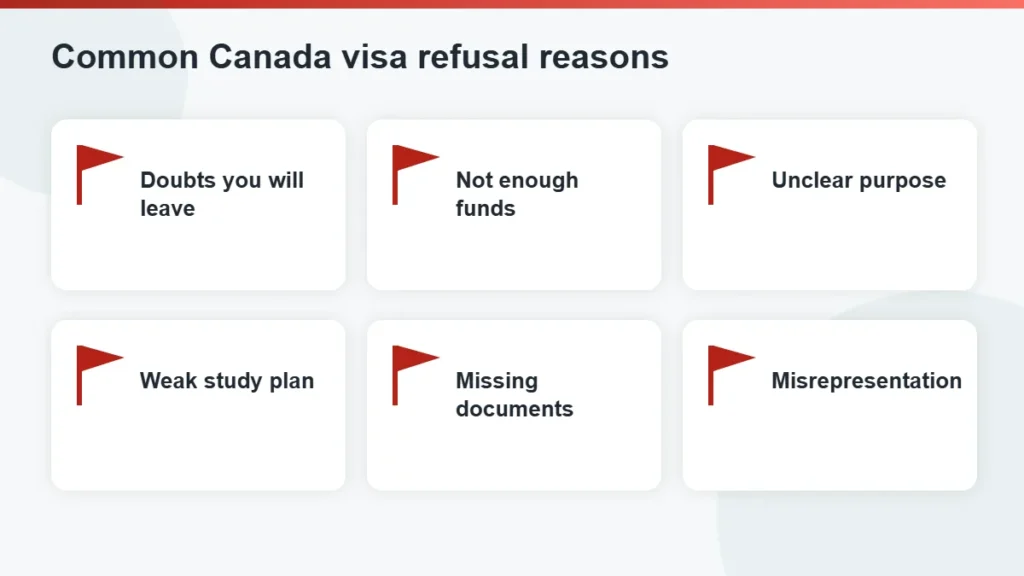
Doubts that you will leave
For example, the officer may not be satisfied that your job, family or property will bring you back home.
Not enough funds
Similarly, your bank records may not show enough money, or the source of the money may be unclear.
Unclear purpose of visit
In addition, a vague travel plan or missing invitation letter can raise doubts.
Weak study plan
For students, the program may not seem to fit your past studies or career goals.
Job requirements not met
For workers, you may not show that you can do the job offered.
Missing documents
Also, an incomplete application can be refused, especially if key proof is missing.
Inadmissibility
Likewise, medical, criminal or security reasons can make a person inadmissible.
Misrepresentation
Above all, false or altered documents can lead to a ban of at least 5 years.
| Refusal reason | What the officer wanted to see | How applicants often respond |
|---|---|---|
| Ties to home country | Reasons to return, such as job, family or property | Employer leave letter, family documents, property papers |
| Financial situation | Enough money from a clear, stable source | Longer bank history, salary slips, tax records, explanations for deposits |
| Purpose of visit | A believable reason that fits your profile | Clear cover letter, invitation letter, travel plan |
| Travel history | Evidence that you followed visa rules before | Copies of past visas and stamps, if you have them |
| Study plan | A logical link to your education and career | Detailed study plan and proof of your background |
How to get the officer’s notes
Usually, officers record more detail in your electronic file than the letter shows. Many people call these “GCMS notes”. To get them, you can make a request under Canada’s access to information and privacy laws.
Who can request? According to IRCC, the person making an Access to Information Act request must be a Canadian citizen, a permanent resident, or someone currently in Canada. Therefore, applicants outside Canada usually ask a trusted person in Canada to request for them, with a signed consent form. IRCC lists the fee for an Access to Information Act request as CAD $5.
Your options after a Canada visa refusal
| Option | When it may fit | Things to know |
|---|---|---|
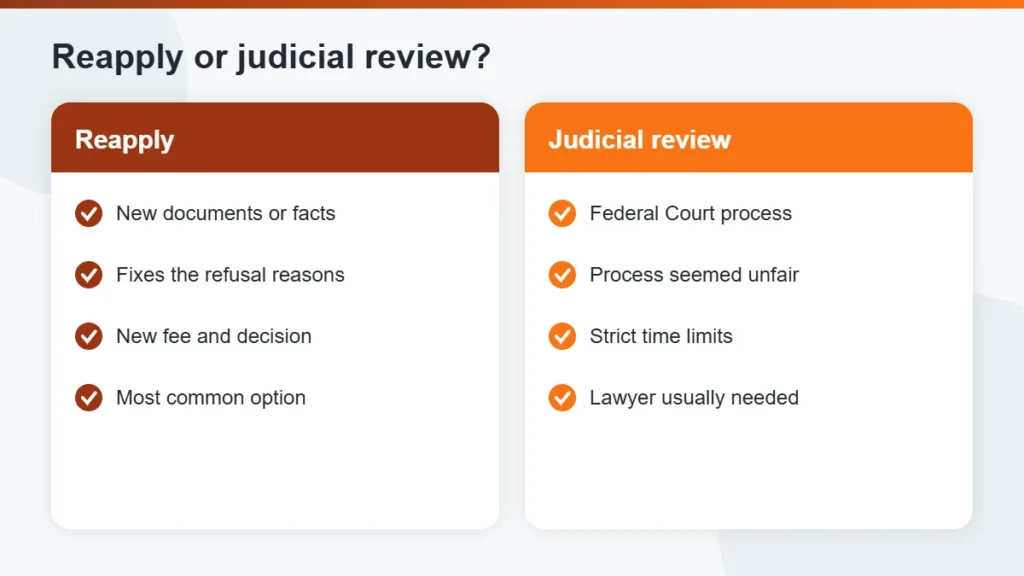
| Reapply | You have new information or documents that address the refusal reasons | You pay the fees again, and IRCC says a changed situation does not guarantee approval |
| Judicial review | You believe the process was unfair | IRCC says you may request it through the Federal Court of Canada; deadlines are strict, so get legal advice quickly |
| Wait and improve | Your situation needs time to change, such as savings or job history | For example, a few more months of stable income can strengthen a new file |
IRCC’s help page on refusals does not describe an appeal for these temporary applications. Instead, it mentions reapplying with new information or a judicial review.
What to do after a Canada visa refusal
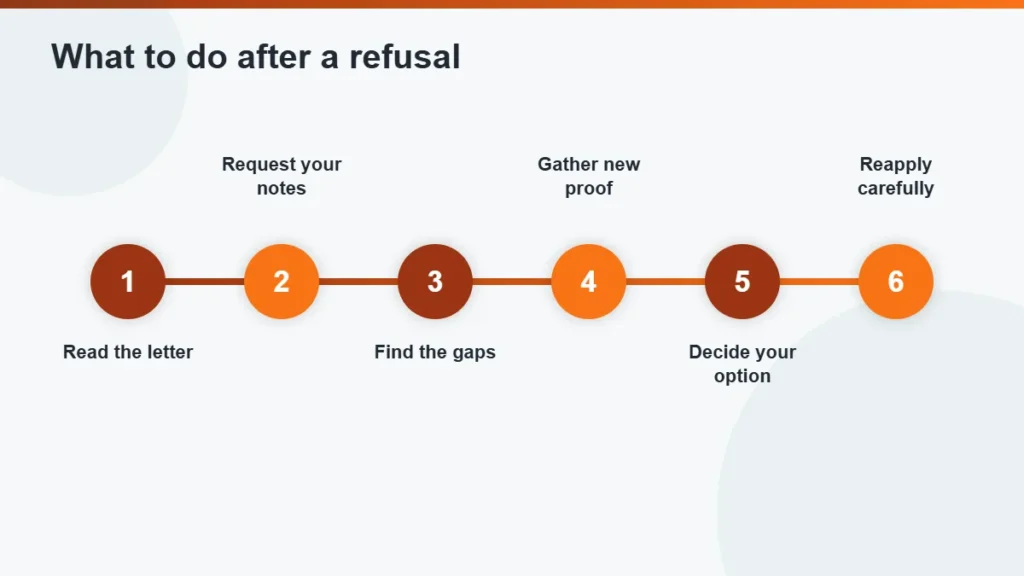
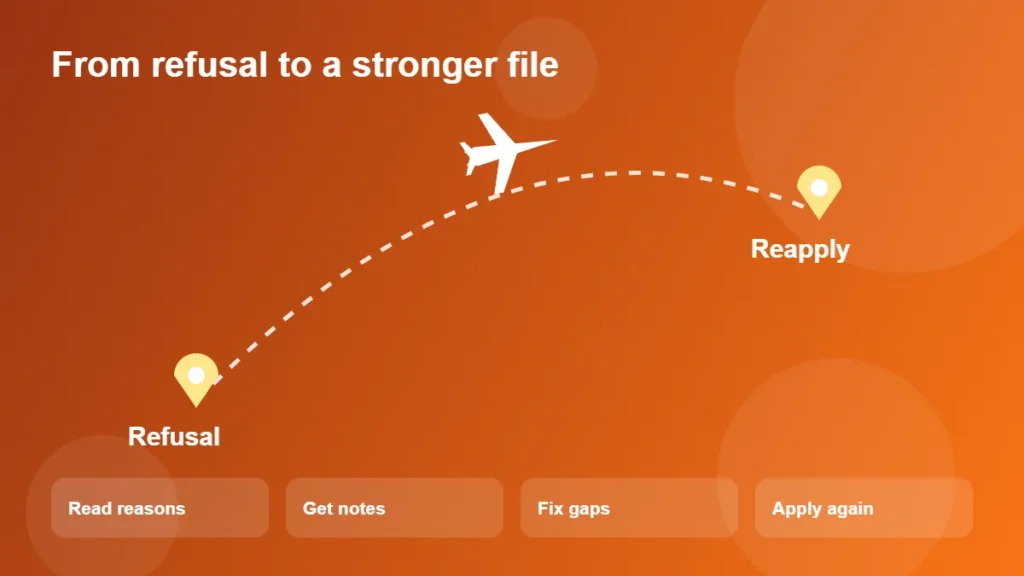
- Read the refusal letterFirst, write down each reason the officer gave.
- Request your notesThen, if the letter is too short, request the officer’s notes through an access to information or privacy request.
- Find the real gapsNext, compare each reason with the documents you sent.
- Gather new proofAfter that, collect documents that answer each concern, not just more paper.
- Choose your optionThen, decide whether to reapply, wait and improve, or speak to a lawyer about judicial review.
- Reapply carefullyFinally, submit a complete, honest application with a clear cover letter.
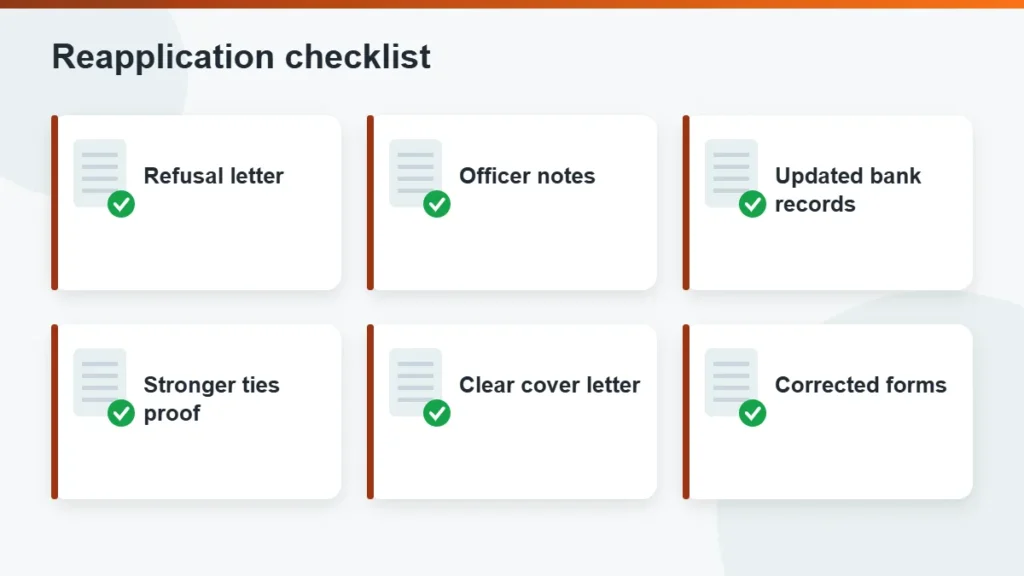
Canada visa reapplication checklist
Use this checklist before you reapply. As you prepare each item, tick it off.
0 of 7 ready
Example (fictional): Usman, a shop owner in Multan, is refused a visitor visa because the officer doubts his finances. First, he requests his notes and sees that the officer could not trace a large recent deposit. Then he adds his business registration, tax records and twelve months of statements that show regular income. As a result, his new application answers the exact concern that caused the refusal.
Mistakes to avoid when you reapply
Sending the same file
IRCC says the same details will probably not change the result.
Fake documents
Instead of helping, they can lead to a ban of at least 5 years.
Hiding the refusal
Also, always declare past refusals honestly in new forms.
Sudden deposits
Similarly, unexplained money just before applying can raise doubts.
Paying for guarantees
No one can guarantee a visa, according to IRCC.
Rushing
Finally, take time to fix the real issue before reapplying.
Depending on your application, these guides can help you rebuild your file: Canada visitor visa from Pakistan, Canada study permit from Pakistan and Canada work permit requirements. In addition, you can compare processing details in our article on the Canada visitor visa processing time.

Canada visa refusal reasons: FAQs
Can I reapply after a Canada visa refusal?
Yes. According to IRCC, you can reapply when you have new information or documents that address the reasons for refusal.
How long should I wait before reapplying?
There is no general waiting period for most temporary applications. However, it makes sense to wait until you can actually fix the reasons in your letter.
What are GCMS notes?
In short, they are the officer’s notes in your electronic IRCC file. You can request them through an access to information or privacy request.
Can I appeal a visitor visa refusal?
IRCC’s help page does not describe an appeal. Instead, it mentions reapplying with new information or asking the Federal Court for a judicial review.
Does a refusal affect future applications?
Of course, you must declare past refusals in new applications. Even so, a refusal does not automatically mean future refusals if you fix the issues.
Can an agent guarantee approval after a refusal?
No. In fact, IRCC says no one can guarantee you a visa to Canada.
Want to understand your refusal letter?
Meanwhile, you can send your general questions through the WhatsApp button on this page. We can explain common refusal reasons and point you to official sources. However, we are not a licensed immigration consultant or lawyer, so we cannot represent you or review a court case.